
Fitzharris details the diagnostic methods of Joseph Bell in new biography
The medical historian’s new book examines how the Edinburgh surgeon’s unique clinical skills inspired Sherlock Holmes.
By George Parker ·
Medical historian Lindsey Fitzharris has released Sleuth-Hound: The Case of the Real Sherlock Holmes, a new biography of Joseph Bell. The book details the life of the Edinburgh surgeon who served as the primary real-life model for Arthur Conan Doyle’s fictional detective. Fitzharris aims to provide a medical history perspective on Bell, a figure known in literary circles but less so in general medical histories.
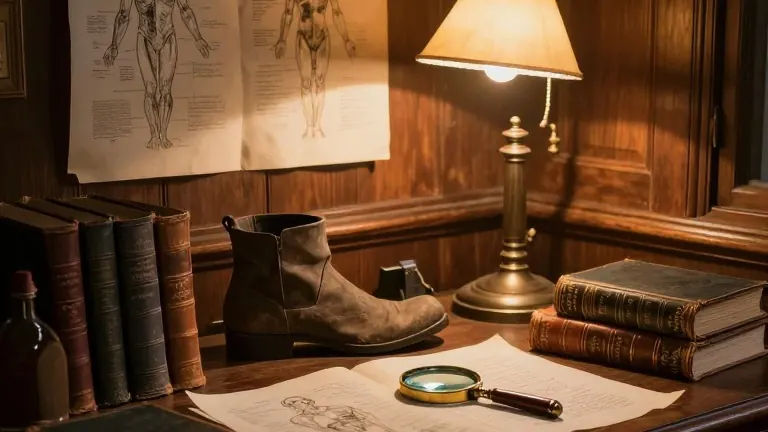
Bell worked at the University of Edinburgh, where he taught Doyle while the author was a young medical student. The surgeon was known for his distinct diagnostic approach. He could identify a patient’s occupation, habits, and ailments by observing them closely. In one specific instance, Bell identified a patient’s walking route by examining the type of clay on their boots. Doyle later adapted this incident for the novel The Sign of the Four. Bell also collaborated with a local police surgeon on several high-profile murder cases during his career.
Fitzharris has previously written about other medical figures. Her 2017 book The Butchering Art focused on Joseph Lister, a pioneer of antiseptic surgery. In 2022, she published The Facemaker, which profiled Harold Gillies and his work reconstructing the faces of World War I veterans. More recently, she hosted a Smithsonian Channel documentary in 2020 that investigated famous deaths, including those of Pablo Escobar and Harry Houdini. Last year, she and her husband, Adrian Teal, co-authored an illustrated children’s book titled Dead Ends! Flukes, Flops, and Failures that Sparked Medical Marvels.
The new book returns to the same Edinburgh setting as The Butchering Art, a city associated with historical medical discoveries and figures like body snatchers. Fitzharris noted that while Bell was a known inspiration for Holmes, a comprehensive commercial biography had not been written until now. A previous book on Bell was published in 1982 by Ely Liebow. That earlier work is familiar to those in the Sherlockian community, but Fitzharris sought to analyze Bell through the specific lens of medical history rather than literary analysis.
Fitzharris explained that her goal was to bring a medical history lens to the subject. She stated that she had known about Bell’s role as an inspiration for the character due to her background, but wanted to explore the clinical methods that defined his practice. The book covers his work at the Edinburgh infirmary and his interactions with the local police force. It provides a detailed look at the man behind the fictional detective, focusing on his professional life and his contributions to the field of surgery and diagnosis in the late 19th century.
Source: Ars Technica