
Israel Election: 56 Seats Projected for Opposition as Netanyahu Bloc Trails
Exit polls are due at 10:00 p.m., with the final Channel 12 survey showing a gap that prevents either side from forming a majority without Arab party support.
By Amelia Foster ·
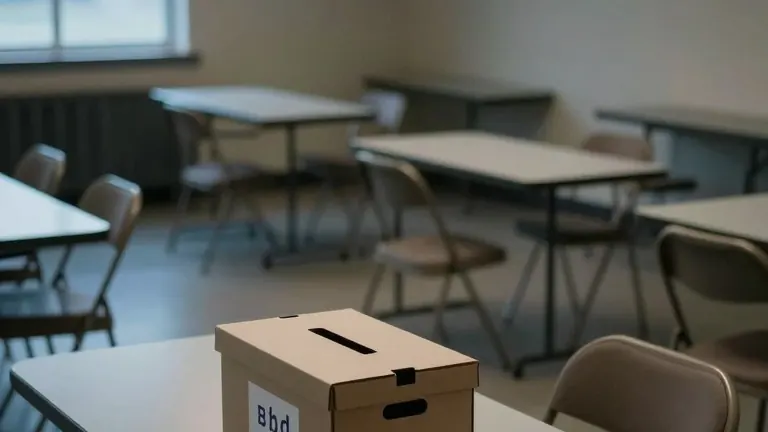
The final Channel 12 poll released on Friday projects 56 seats for the opposition bloc, leaving the group six seats short of the 61 required to form a government. This projection places the opposition ahead of Prime Minister Benjamin Netanyahu’s bloc, which is forecast to win 50 seats. The survey data suggests that neither side can secure a majority independently, forcing both to seek alliances with smaller parties or the Arab bloc.
Voting began at 7:00 a.m. Tuesday as Israelis cast ballots in the first Knesset election since the October 7, 2023, Hamas attack. The political environment has shifted sharply since the 2022 vote, with security and the war dominating the campaign. The final poll shows Eisenkot’s Yashar party leading all parties with 22 projected seats. This number exceeds the 19 seats projected for Likud, the largest party in Netanyahu’s coalition. B’Yachad, led by former Prime Minister Naftali Bennett, is projected to win 14 seats.
The current Knesset includes 32 seats held by Likud, meaning the party faces a loss of 13 seats if the final poll holds. The opposition bloc has pushed for accountability regarding the October 7 attacks, arguing that Netanyahu should no longer serve as prime minister. He has led the country for 19 non-consecutive years. The fate of his leadership remains a central question for voters.
Key issues driving the vote include the Israel Defense Forces manpower crisis after three years of war and the contentious legislation regarding ultra-Orthodox conscription. Voters are also weighing calls for a state commission of inquiry into government failures surrounding the October 7 attack. Traditional issues, such as the establishment of a Palestinian state, have receded in prominence. Most parties now agree against Palestinian statehood due to the changed security outlook.
Voting at Israeli diplomatic missions abroad concluded on October 16. Military base voting began last week. Exit polls are scheduled for release at 10:00 p.m. Tuesday to provide preliminary projections. Official results will be finalized in the coming days once the full count is complete. The Taub Center estimates that with a 70% turnout, similar to 2022, a party needs 165,635 votes to cross the 3.25% threshold.
Higher turnout raises the number of votes required for smaller parties to enter the Knesset. This dynamic affects parties like Ofer Winter’s People of Israel party and Yoaz Hendel’s the Reservists-Economics party. Whether these groups clear the threshold will influence coalition math for both major blocs. A slight shift in support for these smaller parties could determine representation for their supporters.
The Arab parties are projected to win a combined 16 seats. Most opposition leaders have pledged not to form a government with these parties, citing the aftermath of October 7. Netanyahu’s bloc also lacks a clear path to 61 seats without external support. The result may leave both sides dependent on smaller, potentially pivotal parties.
Police have prepared for public order disruptions, particularly after the exit polls drop. Approximately 20,000 police officers, Border Police officers, and volunteers are deployed nationwide for Election Day. Forces are stationed at thousands of polling stations and surrounding areas to protect voters and maintain safety. The police stated their goal is to safeguard the integrity of the elections and ensure the democratic process follows the law.
Voter turnout will determine the final seat distribution. As more Israelis vote, the vote count needed for small parties to clear the threshold increases. This creates a tighter race for the parties currently hovering near the 3.25% mark. The final outcome will depend on how these small parties perform and which bloc can assemble enough seats to govern.
Source: The Jerusalem Post