Calgary gel treats 6,000 Ukrainian soldiers
A wound care product developed in Canada is now standard issue on the front lines, with results presented in Toronto.
By George Parker ·
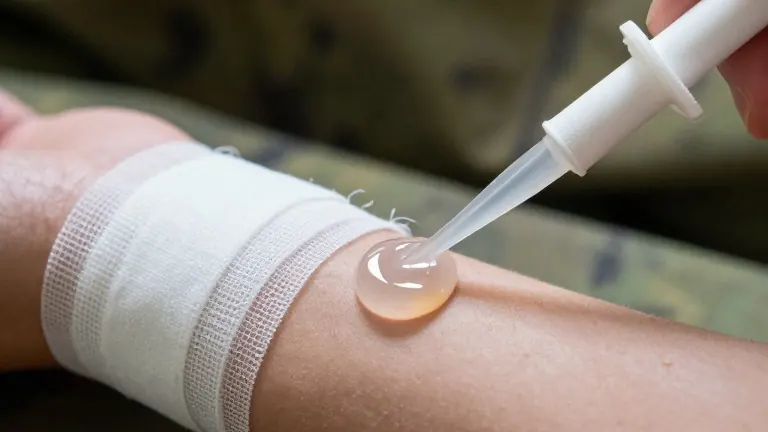
Six thousand wounded soldiers and civilians have received a new wound treatment on the Ukrainian front lines since June. The product is a catalytic gel developed by Calgary-based NanoTess. Megan Leslie, the company's co-founder and CEO, presented the usage data at the CAN Health Network Annual Conference in Toronto on Wednesday.
The gel, named NanoSALV Catalytic, uses nanomaterials to speed up the body's natural healing. It also fights infection-causing microorganisms. The company originally received a grant from Canada's Department of National Defence in 2020. Health Canada approved the product in 2022. Before its military deployment, the treatment was tested on unhoused populations in encampments.
Leslie described the current deployment as a full circle moment for the technology. The gel is suspended in a lightweight, non-flammable base. This physical property allows medical teams to transport it to the front lines by drone. Individuals with limited medical training can apply the treatment effectively because of this ease of transport and application.
Hailie Uren, a clinical pharmacist working with the Ukrainian Ministry of Health, has been in eastern Ukraine for the past four years. She noted that the gel saves critical time on the battlefield. In some hospitals, a single nurse is responsible for up to 90 patients. Uren explained that the gel begins working immediately after application. The wound can heal without consistent nursing intervention.
Uren said the demand for the catalytic gel is high among patients. She described a scenario where, after treating one casualty, other people in the room would point out their own wounds so she could apply the treatment to them as well. The gel reduces the energy required for healing and combats germs.
The relevance of burn treatment in military contexts recently gained attention in Canada. A wind-whipped wildfire killed four Canadian soldiers and burned dozens more at Canadian Forces Base Wainwright earlier this month. Dr. Eric Fung, an Alberta-based surgeon who has spent time in Ukraine, remarked that colleagues in Edmonton were responding to some of the larger burn injuries following the incident.
Fung noted that mass casualty events overload an already overtaxed healthcare system. Medical teams must move patients through hospitals efficiently to manage the influx. The gel helps reduce this strain by facilitating faster treatment and recovery.
Source: CBC News