21 Tonnes Seized: Canadian Cannabis Floods European Ports
Belgian customs officials report a record year for seizures at Antwerp, attributing the surge to price disparities between North American and European markets.
By George Parker ·
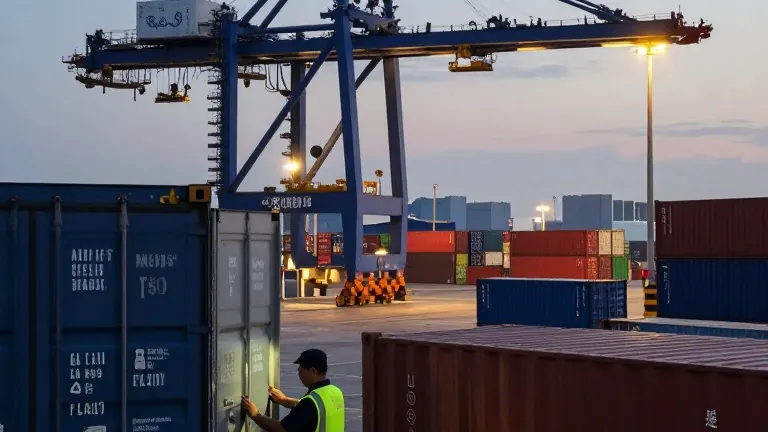
Twenty-one tonnes of Canadian cannabis were seized at the Port of Antwerp in 2025, a volume that surpassed illegal exports from every other nation, including Morocco. Belgian customs officials identified the surge as a direct result of legalization in Canada, which they say allows criminal groups to exploit a massive price gap between the two continents.
The financial incentive drives the operation. Europol data shows the wholesale price for a kilogram of Canadian marijuana in the Netherlands is approximately 4,100 Euros, or 6,429 Canadian dollars. In the United Kingdom, the price reaches 6,000 Euros, or roughly 9,408 Canadian dollars. By comparison, the RCMP reports the average wholesale price for a kilogram of dried cannabis in Canada is between 1,000 and 1,500 Canadian dollars.
Kristian Vanderwaeren, the director general of Belgian Customs and Excise, stated that the surge became apparent in 2024, triggering a red alert at the port. He contacted the Canada Border Services Agency for assistance. The CBSA confirmed a sustained increase in illegal export attempts since 2022, particularly to Europe. In 2025 alone, CBSA agents seized about 34 tonnes of cannabis products intended for export at maritime border points.
Smugglers use inventive methods to hide the product. In one instance, agents found vacuum-packed marijuana inside hollowed-out juke boxes that were shipped in a container labeled as household belongings for a family moving to France. In another case, officers discovered crates of cannabis hidden behind a facade of wooden fire briquettes. Sara Van Cotthem, a communications officer with Belgian customs, noted that the darker edges of the briquettes on X-ray images prompted the inspection.
Ine Van Wymersch, Belgium’s drug commissioner, described the situation as a supply-driven market. She said criminal groups are exploiting a gray zone in Canadian policy. The violence associated with the trade has increased in Brussels, with 74 shootings recorded so far this year. Van Wymersch noted that while the shootings are mainly related to cocaine, cannabis also plays a role.
Europol reports that criminal networks are adapting to obstacles by rerouting containers through the United States or the Caribbean. The agency predicts the illicit trade will persist due to the high potency and low production cost of North American cannabis. A recent trial in Berlin convicted ten men for smuggling 1.1 tonnes of cannabis from Canada, with the main defendants receiving sentences of six and a half to 15 years.
A letter of intent was signed by customs heads from Canada, Belgium, France, and the Netherlands to improve cooperation. Vanderwaeren observed a slight decrease in recent months, which he credits to increased CBSA efforts. However, he warned that the policy effectively sponsors criminal organizations by enabling their profits.
Van Wymersch described the issue as glocal, requiring both local and global solutions. She emphasized that blaming one side will not solve the problem, as the agencies need each other to create a sustainable response to the smuggling networks.
Source: CBC News