Catholic imagery anchors the horror genre in new analysis
A new book by Matthew Cressler argues that Catholic theology and rituals provide the structural backbone for many of Hollywood's most enduring monster films.
By Amelia Foster ·
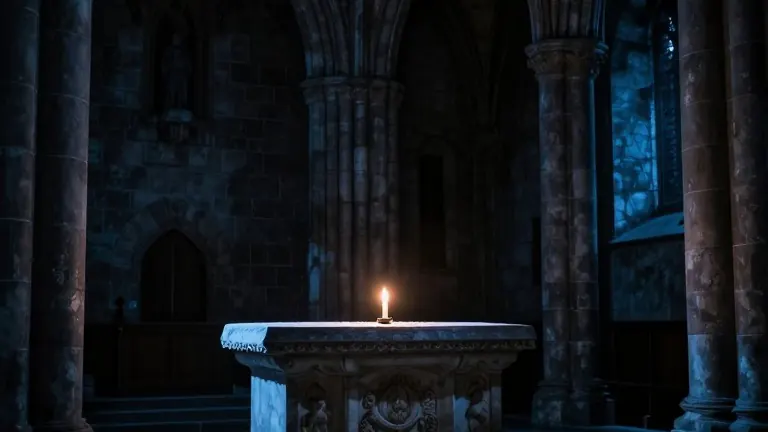
Horror audiences encounter a specific visual language when religious elements appear on screen, according to a new book that maps the connection between Catholic doctrine and the genre. Matthew Cressler, co-author of "Body And Blood," states that Hollywood favors Catholicism because of its specific aesthetic and theological tools. He notes that the genre relies on the visual contrast of the white clerical collar against the figure of the devil. Cressler argues that this imagery is so familiar that it signals danger to viewers before a threat is explicitly shown.
The book identifies theological concepts that align with horror narratives. Cressler points to the Catholic emphasis on suffering as a path to closeness with Christ. He explains that this theology supports plots where characters endure physical pain to achieve redemption or salvation. This framework allows filmmakers to use extreme physical discomfort as a narrative device rather than just a shock tactic.
Filmmakers with Catholic backgrounds cite their upbringing as preparation for the craft. Aislinn Clarke, a director who wrote about her experience, recalls the Eucharist as a formative moment. She describes the priest holding up a cup and saying, "this is the blood of Christ, this is the body of Christ." Clarke noted that as a child interested in horror, she viewed the ritual as having a cannibalistic quality. She says this early exposure to symbolic transformation directly informed her approach to directing scary films.
Recent films use these elements to critique the institution itself. Clarke directed "The Devil's Doorway" in 2018, a film that features bleeding statues and demonic possession. She identifies the most horrifying scene not as the possession, but as a sequence where nuns sing hymns to Christ while ignoring a young woman in labor. The film uses the ritual of worship to highlight the neglect of human suffering. This approach differs from older films that simply used priests as exorcists.
The influence of these symbols extends beyond overtly religious plots. Cressler argues that the veneration of the dead, a core Catholic practice, appears in films that do not explicitly feature the church. He cites the example of a character keeping a mummified corpse in a basement, a trope that mirrors the care of relics. This suggests that the genre borrows the emotional weight of relic veneration even when the setting is secular.
Reverend Aaron Williams, a pastor at St. Mary's Basilica in Mississippi, consulted on the 2025 horror film "The Ritual." He explains the theological basis for the authority of exorcism. Williams states that a priest acts not on personal power but through the sacramental character received during ordination. He notes that the church maintains a rite of exorcism, even if the average Catholic does not hold the dramatic views depicted in movies.
Cressler suggests that these cinematic portrayals shape public perception of the faith. He observes that if a room contains too many candles, crosses, and statues, viewers instinctively expect something wicked to arrive. This conditioned response demonstrates the deep integration of Catholic symbols into the horror genre. The book concludes that these themes continue to evolve as filmmakers explore new ways to use grace and redemption as narrative drivers.
Source: Connecticut Public Television