New border clashes in Arunachal Pradesh test Modi's security record
Indian paramilitary chief confirms ongoing standoffs with Chinese troops, complicating diplomatic efforts to ease tensions between the two nations.
By Amelia Foster ·
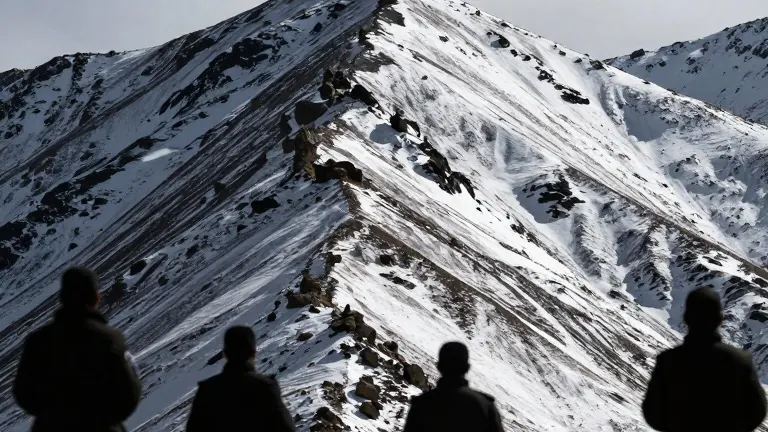
Residents of remote villages in northeastern India are watching Chinese soldiers occupy high ground above their homes, a development that has intensified friction along the Himalayan border. Shatrujeet Kapur, the director general of the Indo-Tibetan Border Police, confirmed late last week that Indian commandos are engaged in multiple active face-offs with the Chinese army in the Arunachal Pradesh state.
The current standoff marks the latest escalation in a decades-long dispute over the 3,488-kilometer boundary between the two nuclear-armed neighbors. Kapur stated that the confrontations continue in the Upper Subansiri region, an area where Indian and Chinese forces first clashed in 1959. Local civil society groups have reported that Chinese personnel are encroaching on Indian territory and blocking access to traditional patrolling points.
These developments complicate the diplomatic thaw between New Delhi and Beijing. Chinese President Xi Jinping visited New Delhi last month for the BRICS summit, marking his first trip to India in seven years. The two leaders met on the sidelines as their governments sought to normalize relations, a move partly driven by trade pressures from the United States that have pushed the rivals closer together.
The timing of these new standoffs poses a political challenge for Prime Minister Narendra Modi. His administration has cultivated an image of strength on national security, yet it has faced scrutiny since the 2020 Galwan Valley clash in Ladakh. At least 20 Indian soldiers died in that hand-to-hand combat, an event that exposed gaps in the government's handling of border security and led to questions about why Chinese troops were able to advance before the fight began.
Bosiram Siram, the top leader of the Congress party in Arunachal Pradesh, said his party delegation visited the border areas in August and found Chinese troops stationed roughly 50 kilometers deep in Indian territory. Siram described the tactical disadvantage, noting that Chinese forces are positioned on top of mountains while Indian personnel are located below.
India’s foreign ministry responded to Kapur’s remarks by stating that border situations are occasionally disturbed when Chinese forces deviate from established patrolling patterns. Spokesperson Randhir Jaiswal did not specifically comment on the ongoing face-offs. The government has not yet confirmed the full nature of the recent tensions, offering instead general criticisms of Beijing's actions.
Analysts suggest the standoffs may be a pressure tactic by Beijing. Praveen Donthi of the International Crisis Group warned that because the border remains undemarcated, such confrontations are likely to recur. He added that the power differential between the two militaries often leads the Indian government to downplay events that reflect poorly on its security posture.
The diplomatic channels designed to manage the dispute have struggled to produce a lasting fix. The 36th meeting of the Working Mechanism for Consultation and Coordination on India-China Border Affairs was held on August 6, nearly a month after reports of the incursions first emerged. A commander-level meeting followed in September in Arunachal Pradesh, but the continuing face-offs indicate that these discussions have not yet resolved the underlying friction.
Source: Al Jazeera