Orange County Water District Gains Legal Cover to Remove River Vegetation
State wildlife regulators will amend a permit to allow bulldozing of plant life and sediment, a move critics say undermines protections for birds and soil health.
By Amelia Foster ·
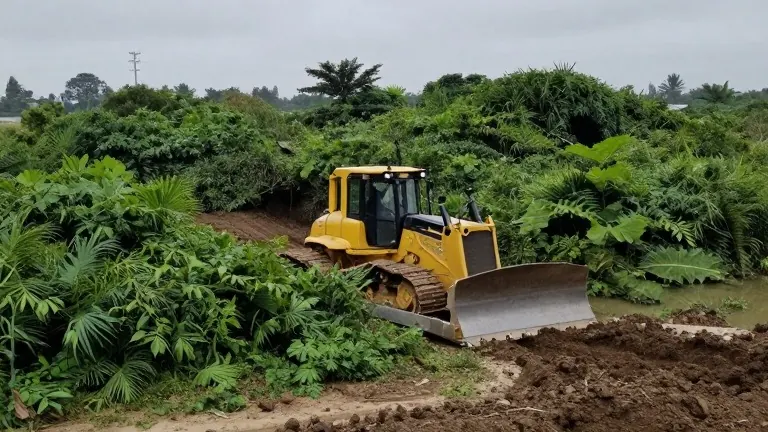
Residents along the Santa Ana River will soon see continued mechanical removal of vegetation and sediment, as the California Department of Fish and Wildlife moves to amend its agreement with the Orange County Water District. The change clarifies that bulldozing plant life and shifting sediment are permissible components of levee maintenance, directly addressing a gap in the current permit that has sparked conflict between the agencies and environmental groups.
The amendment responds to a specific oversight in Table 2 of the existing streambed alteration agreement. While the current document lists maintenance of access ramps, structures, and sand levees as allowed activities, it does not explicitly check the boxes for vegetation removal or sediment disturbance. Water District public affairs director Gina Ayala stated in a Tuesday email that the agency has performed this work for decades and considers it critical. She argued that the absence of a checkmark does not prohibit the activity, describing Table 2 as a guide for routine maintenance rather than a strict exclusion list.
Fish and Wildlife acknowledged the confusion caused by the document's structure. In a Tuesday email, department information officer Cort Klopping explained that creating and repairing sand levees often requires removing non-native plants and moving sediment. The department stated it is working with the water district to update the agreement to reflect this reality. Officials noted that while the two entities have only recently begun these discussions, the timing for the changes to take effect remains undetermined.
The regulatory shift follows a period of heightened tension. In July, the water district received a violation notice from Fish and Wildlife after bulldozing a migratory bird nest. The district is currently contesting that violation. Public criticism intensified during an October 7 board meeting, where commenters and activists voiced concerns about heavy machinery tearing out plant life that serves as habitat for protected bird species.
Environmental advocates argue the amendment weakens the regulatory framework. Brent Linas, co-founder of Creek Team, described the department's stance as a failure to enforce the original permit's intent. Linas said the permit allowed the district to absorb water and build flow impediments provided the river was not destroyed, but he characterized the new approach as the agency yielding to the water district due to a fear of conflict.
Kathryn Dressendorfer, program manager for the Ocean Friendly Gardens initiative at the Surfrider Foundation, raised concerns about the physical impact of the work. She explained that soil functions as a natural filter for pollutants, heavy metals, and bacteria. Using heavy equipment in water-logged soil compacts the ground, reducing its ability to infiltrate water and damaging its open, spongy structure. Dressendorfer also noted that bulldozer operators rarely distinguish between native and invasive species, removing all vegetation in their path.
The water district maintains that the disturbance is an unavoidable byproduct of necessary levee repairs. Ayala acknowledged that the process causes incidental destruction of vegetation but stated that the work cannot proceed without it. The district’s website suggests that birds benefit from the activity, claiming they follow bulldozers to feed on stirred-up insects and fish. Dressendorfer disputed this, stating that the machinery interrupts the birds' feeding patterns rather than attracting them like cattle egrets do in fields.
Bethany Nelms, another co-founder of Creek Team, highlighted the difficulty in securing direct dialogue with Fish and Wildlife. She recounted a conversation with District Attorney Todd Spitzer, who advised her to seek an injunction, a legal step that can cost upwards of $10,000. Nelms questioned why the regulatory agencies could not simply enforce their existing duties without requiring private groups to litigate the issue.
Fish and Wildlife has issued 2,438 lake and streambed alteration agreements between 2022 and 2025. Of those, 311 were issued to Region Five, which covers Santa Barbara, Ventura, Los Angeles, San Diego, and Orange counties. The pending amendment to the Orange County Water District agreement will add explicit language permitting the removal of non-native vegetation and the movement of sediment in the Santa Ana River.
Source: Voice of OC