U.S. Homeowners Face Steeper Weather Bills as Insurance Retreats
Cotality data shows Louisiana's annual weather losses could hit $11.4 billion by 2050, while insurers exit high-risk markets.
By George Parker ·
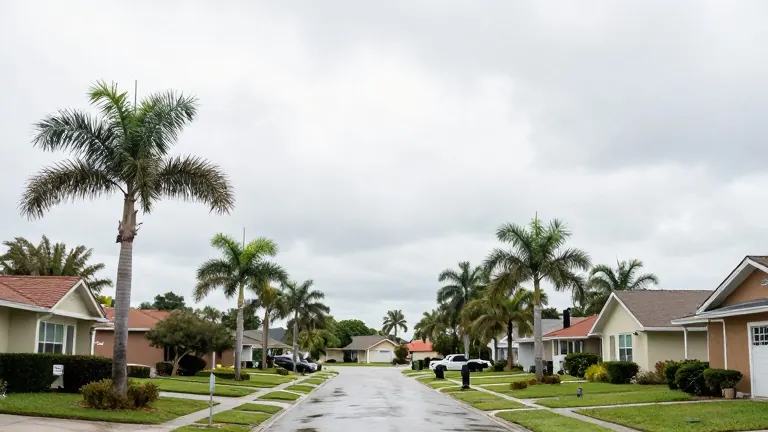
Homeowners across the United States will likely pay more for weather damage in the coming decades, according to a report released Wednesday by Cotality. The property data firm projects that financial losses tied to extreme weather will climb sharply by 2050. This increase coincides with insurers raising premiums and, in some cases, leaving high-risk markets entirely, leaving residents more exposed.
Louisiana ranks as the state where homes are most exposed to severe storms under Cotality's risk-scoring model. The state already sees $6.7 billion in average annual losses, mostly from hurricanes. By 2050, that figure is projected to climb to $11.4 billion. Dr. Howard Botts, chief scientist at Cotality, noted that increased inland flooding will drive much of that growth.
Mississippi and Florida follow Louisiana in vulnerability due to their hurricane exposure. The report estimates that total housing market losses in those states will grow by roughly 62% and 54%, respectively, by 2050. Flooding and hurricanes are expected to drive the largest share of losses nationwide. However, residents of inland states like West Virginia also face a mounting toll from rising water levels.
The gap between the riskiest and safest states is narrower than many assume. Cotality estimates that the 10 least-exposed states will see weather-related losses rise nearly 38% by 2050. In comparison, the 10 riskiest states will see an increase of about 47%. Botts warned that a low-risk status does not equate to no risk, as every state has its own mix of perils and resilience.
In raw dollar terms, California and Texas currently lead the nation in weather-related losses. California averages $18.2 billion a year, while Texas averages $11.5 billion. By 2050, those annual losses are projected to reach $22.4 billion in California and $16.5 billion in Texas. Botts stated that while people often picture coastal states when thinking of extreme weather, the most severe concentrations of risk are not always where expected.
Other research supports these trends. A report released earlier this year by climate risk modeling firm First Street found that short-duration, high-impact weather events have produced $794 billion in total insurance payouts over the last 25 years. This total exceeds the combined losses from flooding, earthquakes, and drought.
Source: CBS News
More Business · National news · Bad Service · Report a business · Got a Story?