
Coastal Bear Population Shows Low Genetic Diversity in New DNA Analysis
Researchers at North Carolina State University found that bears in eastern habitats have less genetic variation than those in the west, a condition linked to historic population drops and modern barriers.
By George Parker ·
Black bears in eastern North Carolina possess significantly less genetic diversity than their counterparts in the western part of the state, according to a new study by North Carolina State University. The research team analyzed DNA samples from 76 bears to assess the health of regional populations. These samples were drawn from two of the state's three main bear habitats: the mountains and the coast.
The study collected 49 samples from mountain bears and 27 from coastal bears. Dr. Matthew Breen, a professor in the College of Veterinary Medicine and the project lead, noted that the eastern population shows a marked reduction in genetic variation. He explained that bears typically breed only with individuals in their immediate vicinity. This localized breeding has allowed the coastal group to develop a distinct genetic profile that is narrower than that of the mountain population.
Isabella Livingston, a postdoctoral researcher and the first author of the study, provided context on the causes of this disparity. She stated that the coastal bears do not currently show as much recent inbreeding as the mountain bears. However, the reduced diversity likely stems from historic inbreeding events. These events occurred when coastal populations were severely reduced during the late 19th and early 20th centuries. The study suggests that this historical bottleneck has left a lasting mark on the current gene pool.
Modern infrastructure further complicates the situation for coastal bears. Highways and new neighborhood construction act as physical barriers. These developments limit the movement of bears, confining them to specific areas and reducing their ability to mix with other groups. Livingston said the team's new tools are now being used to determine which specific individuals are most affected by these barriers.
The researchers developed a set of single nucleotide polymorphisms, or SNPs, to serve as genomic fingerprints. These markers allow scientists to create a unique profile for each individual bear. Breen explained that this technique enables researchers to identify the population origin of any given bear. It also allows them to match samples from different locations, which is useful for tracking bears that have been moved to other parts of the state.
The team plans to apply these findings to assist North Carolina Wildlife officials in their conservation efforts. The data will help inform management strategies for the state's bear populations. Beyond North Carolina, the researchers aim to expand the toolset to other species, including brown bears and polar bears, to support international population management.
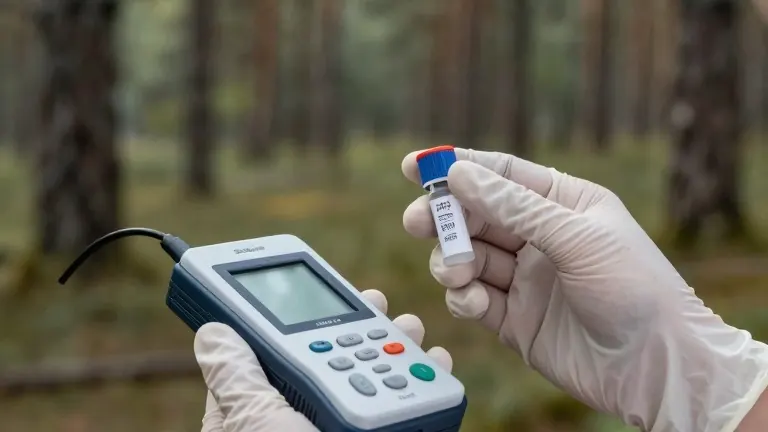
For immediate application, the research team is collaborating with the engineering school at N.C. State to create handheld point-of-care devices. Breen described these future tools as simple sampling kits. He noted that a small sample, such as a hair follicle or cheek swab, would be sufficient for analysis. He added with a touch of humor that he would not recommend putting a hand inside a bear's mouth to collect the sample.
Source: WUNC