Iran's Speaker Says Washington Must Act to Prevent New War After Hormuz Strikes
Qalibaf claims Tehran gave a firm response to the U.S., while India reports a death in an attack on a vessel off Oman.
By George Parker ·
Mohammad Bagher Qalibaf, the speaker of Iran’s parliament and the country’s chief negotiator, stated on Tuesday that the responsibility now lies with the United States to prevent renewed conflict. He made these remarks after Tehran issued what he described as a firm and rational response to Washington. Qalibaf did not provide specific details on the nature of that response during his address to parliament.
His comments followed reports that U.S. military forces conducted defensive strikes against Iranian targets in the Strait of Hormuz. A U.S. official, who spoke on condition of anonymity because they were not authorized to comment publicly, said the strikes targeted Iranian personnel operating surface-to-air missiles. Iranian state television confirmed that explosions were heard on Qeshm Island, a strategic location within the strait.
Qalibaf warned that Iran remains prepared for battle with its finger on the trigger. He told lawmakers that if Washington makes another strategic miscalculation, it will face a new battlefield and find itself in a more desperate position than it is currently. The speaker emphasized that the ball is now in the U.S. court to avoid further escalation.
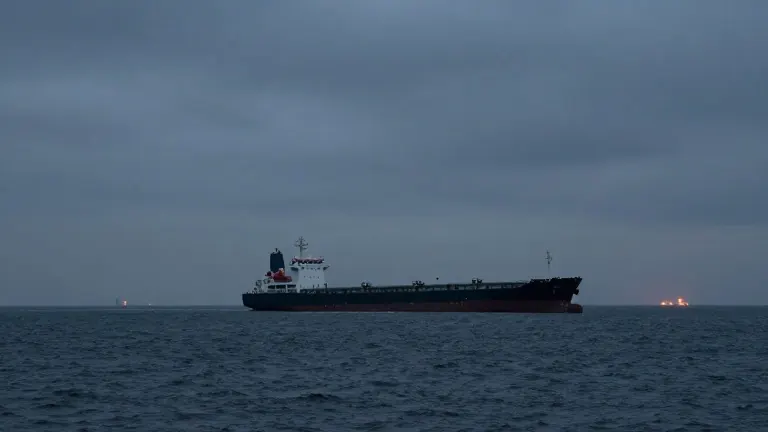
In a separate incident related to the regional conflict, India reported that an attack on a commercial vessel near Limah, Oman, killed one Indian national. Thirteen other individuals were rescued from the scene. Indian Ports, Shipping and Waterways Minister Sarbananda Sonowal identified the vessel as the MSV AL JUSUFI, an Indian-flagged ship. He stated that the ship was hit by an unidentified aerial object on Monday.
India’s foreign ministry indicated that the embassy in Oman is coordinating with local authorities to arrange the return of the rescued nationals and the body of the deceased. No group has claimed responsibility for the attack. However, Iran has previously claimed attacks on vessels it said took unauthorized routes through the strait or struck mines laid during the early days of the war.
The United Nations reported that displaced women and children in Yemen are losing access to essential services due to renewed fighting. The conflict between Iran-backed Houthis and Saudi-backed government forces has displaced approximately 300,000 people over the past few months. This fighting has broken a four-year truce and concentrated on the west coast and the southern province of Taiz.
Francesco Galtieri, the U.N. Population Fund representative in Aden, said the fighting has escalated to levels not seen since 2020. He warned of a rapidly deteriorating humanitarian situation in Taiz, where only five of the city’s 27 emergency maternal and neonatal hospitals remain operational. UNFPA estimates that more than 13,000 pregnant women currently lack access to essential maternal healthcare, leaving thousands of women and girls vulnerable to violence.
Amid these developments, China called on all parties to resolve disputes through dialogue. Foreign Ministry spokesperson Mao Ning stated in Beijing that military means do not help resolve problems and only exacerbate tensions. China announced on Monday that it will send a special envoy to Iran, Oman, and Saudi Arabia in early to mid-November to promote regional peace.
Source: WKMG-TV