Israel Election: No Majority Emerges, Leaving Prime Minister Selection Uncertain
With both major blocs falling short of 61 seats, political analysts see three paths: a coalition with Arab parties, a unity government, or a second election.
By Amelia Foster ·
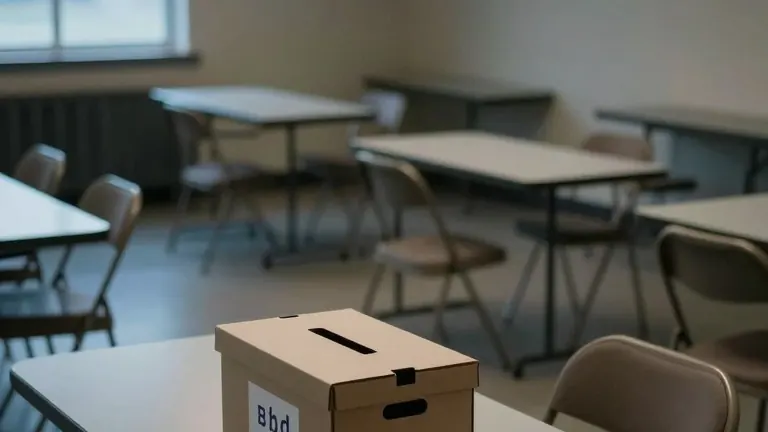
No party bloc in Israel secured the 61 seats required to form a government following the parliamentary vote on Tuesday.
Preliminary counts show Prime Minister Benjamin Netanyahu’s Likud party winning up to 28 seats. His right-wing and ultra-Orthodox coalition remains below the majority threshold. Gadi Eisenkot’s Yashar party is projected to take approximately 22 seats, placing it as the second-largest force. The broader change bloc led by Eisenkot is expected to hold around 47 seats. Arab parties, which both sides pledged to exclude from coalitions, are on track to win at least 17 seats combined.
President Isaac Herzog will begin consultations with party leaders next week to determine who will attempt to form a government. Yohanan Plesner, president of the Israel Democracy Institute, told the Jewish Telegraphic Agency that mathematical and political realities may force leaders to break campaign promises. He noted that public opinion is unprepared for a coalition involving an Islamist party, a tolerance that has declined since the October 7, 2023, Hamas-led raids.
One potential path involves the change bloc partnering with Arab parties, or forming a minority government that relies on their support for key votes. This arrangement could provide up to 65 seats in total support. Avigdor Lieberman of Yisrael Beiteinu has rejected this model, though Jonathan Rynhold of Bar-Ilan University suggested Eisenkot might pressure Lieberman to accept it if he becomes prime minister. The Arab parties may demand concessions that Eisenkot finds difficult to accept.
A second scenario is a unity government spanning the political center. Plesner believes Netanyahu might prefer this route, potentially luring one change bloc party into a coalition that includes ultra-Orthodox and far-right groups. He added that change bloc parties would likely push for a more centrist alliance, requiring Netanyahu to drop a far-right or ultra-Orthodox partner to satisfy military draft demands.
A third option is a second round of elections. Eisenkot called another vote a mistake given the 77.7% turnout, the highest since 1999. However, Plesner noted that a new election may be the most likely outcome, especially if it allows Netanyahu to remain as interim prime minister. This mirrors the sequence of events from 2019 to 2021, when Netanyahu’s bloc was eventually ousted. Gideon Rahat, a political scientist at the Hebrew University of Jerusalem, said the country may be heading toward another election due to entrenched political camps. Plesner estimated it could take weeks or months to determine the next prime minister.
Source: The Jerusalem Post