UK Emergency Stockpiles Drive $6,000 Home Prep Costs
Government guidance on crisis kits has triggered a wave of household spending in the US, Sweden, Japan, and the Netherlands.
By Amelia Foster ·
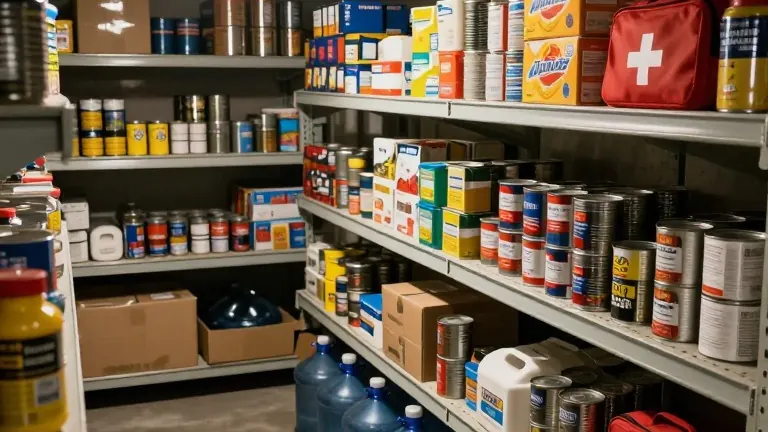
Households in the United Kingdom are rushing to buy tinned food, radios, and torches after the government issued new advice on what to stockpile for a national emergency. The directive mirrors preparedness campaigns already active in other countries, prompting a global look at how families manage their personal crisis kits and the financial cost of maintaining them.
In Maryland, Dan C., a 38-year-old physiotherapist, has spent approximately $6,000 to build a supply chain for his family of four. He stores 150 gallons of water in the basement, using soft plastic containers that fit in the bath. His inventory also includes chlorine dioxide tablets for water purification, solar panels, a propane fireplace insert, and medical supplies such as bleeding control kits. Dan describes his approach as a "rotating pantry," where he uses long-life items like oats and peanut butter for cooking and then replaces them to prevent expiration.
Dan began prepping after becoming a father and after his home lost power for two days during a severe February cold spell. He notes that while he had some supplies, there were gaps in his preparation. He views the effort as a responsibility of homeownership rather than a reaction to catastrophe, aiming to be a "responsible homeowner" rather than someone who catastrophizes.
In Stockholm, Andreas Wennerberg, 30, received a government booklet two years ago detailing actions for a crisis or war. He now keeps a crank radio, a 10-liter water tank, and about 200 Swedish kronor, roughly $170, in cash in his basement. Andreas calls the booklet a "wake-up call" but says he has not followed the guidance in full. He states, "I feel secure.. I'm not that worried."
Ayumi T., a 27-year-old university worker in Tokyo, keeps an emergency rucksack in her wardrobe. She stocks it with clothes, towels, menstrual products, disposable chopsticks, and a disposable toilet. After a 2024 earthquake on the Noto Peninsula killed hundreds of people, she increased her supplies. Her family checks and updates the kit every New Year to replace expired food. Tokyo's government provides a 68-page disaster prevention guide to residents.
Nicole Bonds, a 48-year-old leadership coach in Atlanta, Georgia, has been accumulating supplies for five years. She attributes her efforts to an increase in severe weather patterns. Her stock includes cleaning products, batteries, a power bank, first-aid supplies, and rechargeable fans. She stores these items under her bed and in kitchen cabinets. To keep costs down, she buys small amounts of supplies intermittently rather than making large purchases.
In Hoorn, Netherlands, Michael Stuut, 39, keeps supplies in his attic and a crawl space under his house. The area is below sea level, which fuels his concern about extreme weather and potential war. His stash includes a Starlink Mini satellite device, a generator, a first-aid kit, and about 120 liters of water. He developed an app earlier this year to log his food supplies and track expiration dates.
Dutch authorities launched a campaign in late 2025 instructing households to hold 72 hours' worth of supplies, a timeline similar to the UK's recent recommendation. Michael is skeptical of the three-day advice but believes that having basic items at home eases the burden on emergency services. He told his five-year-old son that the supplies are for days when they do not want to go to the shop, aiming to keep the child from feeling burdened by the preparation.
The UK's new guidance marks a shift in domestic preparedness, aligning the country with neighbors who have long encouraged households to maintain personal crisis kits. The financial outlay for these supplies varies by region and family size, with costs ranging from a few hundred dollars for basic water and cash reserves to thousands for comprehensive off-grid capabilities.
As the UK government's advice takes hold, the market for emergency supplies is expected to see continued demand. The comparison between these nations shows that while the specific items vary, the core principle remains consistent: households are being asked to take on a larger share of the preparedness burden that was previously handled almost entirely by state agencies.
Source: BBC News
More Business · Bad Service · Report a business · Got a Story?