
US Farm Bankruptcies Jump 19% as Fuel Costs Spike
Arkansas rice acreage hits its lowest level since the 1970s as the Iran war drives up input costs ahead of the midterm elections.
By Amelia Foster ·
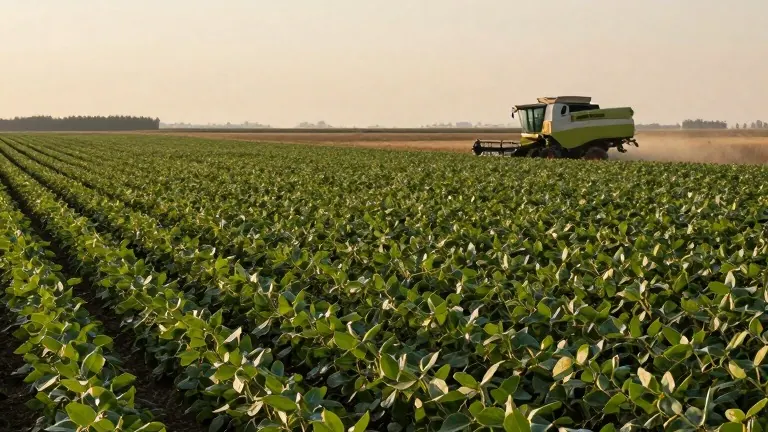
Farm bankruptcies in the United States increased by 19 percent during the first three quarters of 2026, a 73 percent rise compared to the same period in 2024, according to the University of Arkansas National Agricultural Law Center.
The surge in failures follows a sharp increase in production expenses linked to the war in Iran. Ryan Loy, an extension economist at the University of Arkansas Division of Agriculture, reported that urea fertilizer prices peaked at 39 percent above the budgeted amount for Arkansas row crop farmers.
Diesel costs presented an even steeper financial burden. Loy found that fuel expenses averaged 72 percent higher than the projected budget across the planting, growing, and harvesting seasons.
These price spikes resulted in an additional cost of approximately $343 million for farmers in Arkansas alone. The state, traditionally the top rice producer in the country, has seen its rice acreage drop to its lowest level since the 1970s.
Paul McKinney, a fourth-generation farmer in northeast Arkansas, plans to reduce his rice planting next year in favor of soybeans. McKinney stated that soybeans are the least input-intensive crop and offer the best chance to break even or minimize losses.
McKinney manages 24,000 acres alongside his son and nephew. He noted that the family is now farming one of the fields previously owned by Hallie Shoffner, a sixth-generation farmer who closed her 2,000-acre operation last year.
Shoffner cited high costs, low crop prices, and trade uncertainties as the reasons her family could no longer sustain the business. She is currently challenging Republican Senator Tom Cotton in the Senate race, focusing her campaign on rising agricultural costs.
President Donald Trump announced an $8 billion fuel relief program for farmers last week. This follows $12 billion in tariff-related aid distributed in 2025. Loy calculated that if the new fuel relief were divided equally among the 50 states, it would cover less than half of the extra costs Arkansas farmers incurred this year.
The financial strain is influencing political dynamics in rural districts. Democrats are expected to make gains in the November midterms, with Texas and Kansas potentially sending Democrats to the Senate for the first time in decades.
Michael Shepherd, a political scientist at the University of Michigan, noted that many rural voters remain committed Republicans despite economic pain. However, April polling by Farm Journal found that 35 percent of farmers who usually vote Republican and 15 percent who always vote Republican were still considering their choices.
Source: Al Jazeera
More Business · Bad Service · Report a business · Got a Story?